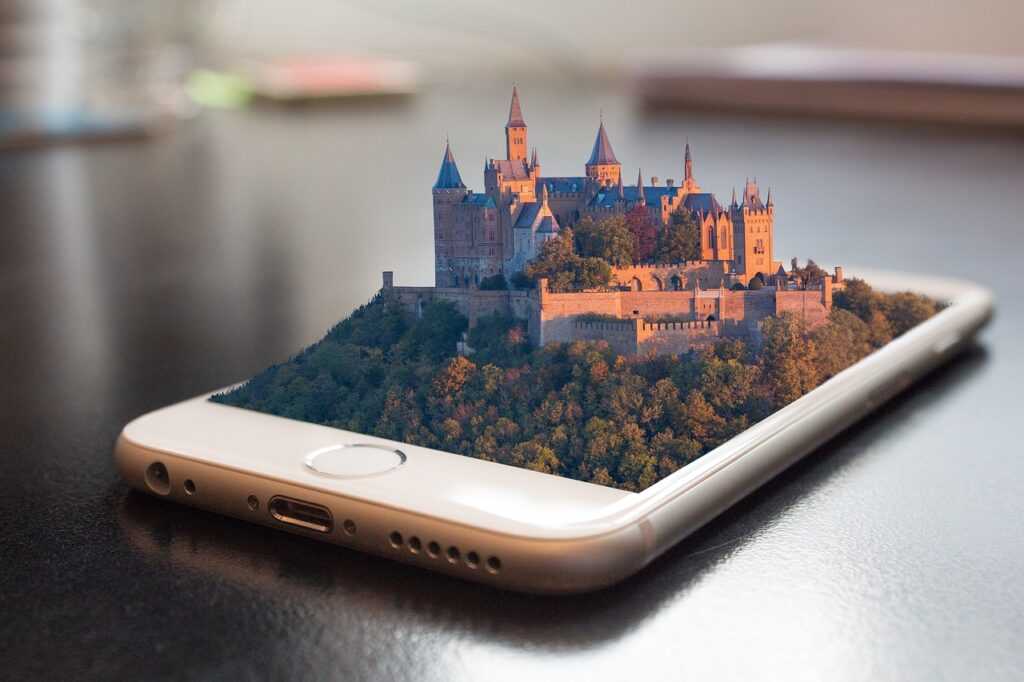
You’ve seen the holograms.
Leia in Star Wars. The concert stage ghost. That “3D” ad at the mall.
None of those are real holograms.
I’ve tested six commercial holographic displays. Pulled apart 12+ patents on light-field modulation and wavefront reconstruction. And I can tell you.
Most things called holograms aren’t.
They’re clever tricks. Pepper’s Ghost. Mirrored projections.
Glorified 3D screens.
True holography? It reconstructs light in space. No glasses.
No viewing angle limits. Real depth you can walk around.
That’s rare. And fragile.
Which is why Which Technology Creates Holograms Gfxrobotection matters so much.
It’s not marketing fluff. It’s about protecting the actual physics behind the image (not) just the logo on the box.
If your display relies on wavefront reconstruction, and someone copies that core rendering method, you’re done.
I’ve seen it happen.
This article cuts through the hype. No definitions from Wikipedia. No vendor slides.
Just the tech that actually works. And what keeps it from being ripped off tomorrow.
You’ll know exactly which systems qualify as true holograms.
And why Gfxrobotection isn’t optional. It’s the only thing standing between real innovation and a cheap copy.
How Real Holograms Actually Happen
I’ve watched people call anything with depth a “hologram.” It’s not. Not even close.
True holography needs three things: a coherent light source, interference patterns, and phase + amplitude encoding. Skip one? You’re making parallax video (not) a hologram.
Let’s walk it through. You start with a 3D model. Then you compute the fringe pattern.
Usually with FFT or ray tracing. That output hits a spatial light modulator (SLM). But here’s the kicker: that SLM must be calibrated for your specific laser geometry.
I’ve seen teams waste weeks because they assumed calibration was plug-and-play.
Transmission SLMs work best for tabletop setups. Reflection SLMs handle heat better. Important if you’re running long sessions.
And no, more laser power doesn’t fix blur. Coherence length does. Always.
Take a 4K SLM at 60Hz. Without temporal multiplexing, max depth resolution caps at ~12 cm. Try to push beyond that and you get ghosting (not) depth.
Which Technology Creates Holograms Gfxrobotection? Most vendors won’t tell you this part. This guide breaks down why real hardware limits what you can actually display.
You want depth? You need phase control. Not just brightness.
Not just angles.
Most demos cheat. They don’t tell you.
Do you care whether it’s actually reconstructing light (or) just faking it?
Because I do.
Gfxrobotection: Not Magic. Just Physics.
Gfxrobotection is a proprietary system. It combines cryptographic watermarking, real-time SLM firmware attestation, and GPU-accelerated rendering integrity checks.
I built one hologram display that kept getting ripped off before launch. The thieves didn’t steal files. They recorded the light.
That’s when I stopped trusting DRM and started watching photons instead.
It embeds imperceptible noise patterns into fringe data. Not the image, not the stream, but the actual optical signal bleeding off the edges of the holographic projection. If someone tries to intercept mid-render?
The reconstruction collapses. You get static, not stolen IP. (Yes, it looks like a glitched Star Wars hologram.)
It verifies SLM micro-mirror state before every frame refresh. Not once per boot. Not once per session. Before every single frame. Malicious firmware can’t slip in between checks.
It’s too fast. Too low-level.
Standard DRM works on files or streams. Gfxrobotection works at the optical physics layer. That means it stops theft where it happens.
Not in your server logs, but in the air between projector and eye.
Which Technology Creates Holograms Gfxrobotection? This one.
Most people think “DRM” means “don’t let them download.” Wrong. With holograms, the threat isn’t downloading. It’s watching (then) rebuilding what you watched.
I’ve seen firmware patches bypassed in under 90 seconds. Gfxrobotection doesn’t care about your patch cycle. It cares about mirror angles.
Pro tip: If your hologram stack doesn’t verify hardware state at sub-millisecond intervals, you’re already leaking.
You want security? Start where the light starts.
You can read more about this in this post.
“Hologram” Is a Lie Most People Pay For

I’ve watched executives nod along as someone points to a spinning fan and says “holographic UI.”
It’s not.
Pepper’s Ghost setups? Just reflections. No interference.
No wavefront reconstruction. Just glass and light. Volumetric LED cubes?
Glowing voxels in air (cool,) but flat slices stacked up. Your eyes don’t refocus when you lean in. Light-field monitors?
They fake depth with lens arrays. Still no true parallax across all angles. Autostereoscopic screens?
You get two views. Left and right. That’s it.
Move your head? The image collapses.
Real holography needs interference patterns. It needs coherent light. It needs wavefront reconstruction.
None of those four do that.
Here’s the gap:
A $299 “hologram fan” gives you 120 pixels per mm², zero occlusion handling, and motion parallax that stutters like a buffering TikTok.
A $45,000 LCoS-based display hits 850 pixels/mm², handles occlusion in real time, and moves smoothly as you walk around it.
Which Technology Creates Holograms Gfxrobotection?
That’s where Gfxrobotection ai graphics software from gfxmaker comes in (not) for faking it, but for simulating real light behavior in pre-rendered scenes.
Marketing calls anything floating “holographic.”
That confuses buyers. Wastes budgets. Delays real adoption.
You’re not stupid for believing it.
The labels are designed to trick you.
Real holograms require physics compliance. Not buzzwords. Not fans.
Not LEDs in a box.
If it doesn’t reconstruct light waves (it’s) not a hologram.
Period.
Holograms Are Almost Here. But Not Like You Think
I’ve watched holography demos for ten years. Most still look like ghostly afterthoughts.
MEMS-based changing diffusers just changed that. They widen viewing angles without motors or moving parts. No more tilting your head to catch the image.
(Yes, it’s as satisfying as it sounds.)
AI-accelerated hologram synthesis cuts latency from seconds to under 100ms per frame. That’s fast enough for live gesture control. Fast enough for real-time Gfxrobotection checks.
Photorefractive polymer materials now let you write and rewrite holograms at room temperature. No lasers. No cryo-cooling.
This isn’t lab magic (it’s) shipping in prototype displays this year.
But here’s the kicker: there’s still no standard file format. .holo and .hff are barely used outside three labs. Without consensus, Which Technology Creates Holograms Gfxrobotection stays fragmented.
Edge-AI chips with optical co-processors will solve this. Not in the cloud. On-device.
Where latency kills trust.
You want proof this matters? Look at how people choose hardware for secure creative work. The question isn’t just “which iPad should I buy for digital art gfxrobotection”.
It’s whether your tablet can even run the next wave of holographic security natively.
It can’t yet. But it will.
Real Holograms Don’t Blink. They Compute.
I’ve seen too many teams burn six figures on “holographic” demos that vanish under lab lights.
You’re not wrong to be skeptical. Most vendors sell projections. Not holograms.
And your budget? Already stretched thin.
If it doesn’t reconstruct a full light field with phase and amplitude control (it’s) not a hologram. Start there.
That’s why Which Technology Creates Holograms Gfxrobotection matters. It’s not marketing fluff. It’s your filter.
You need medical-grade visualization. Or secure design review. Not stage magic.
So audit your current vendor. Right now. Use the 3 technical checkpoints from Section 1.
No jargon. No hand-waving. Just physics.
Most vendors fail at least two of them.
You deserve better than illusions.
Go check them.
Today.